1873 – 1897. The Little Flower · Doctor of the Church. Feast: October 1.
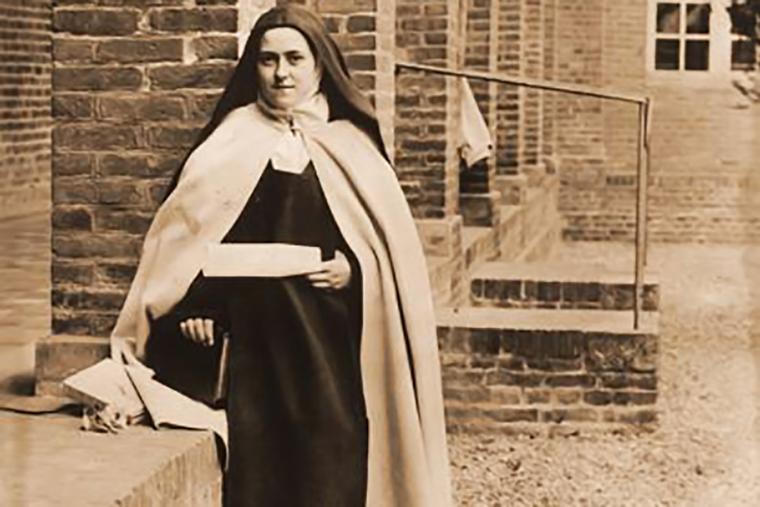
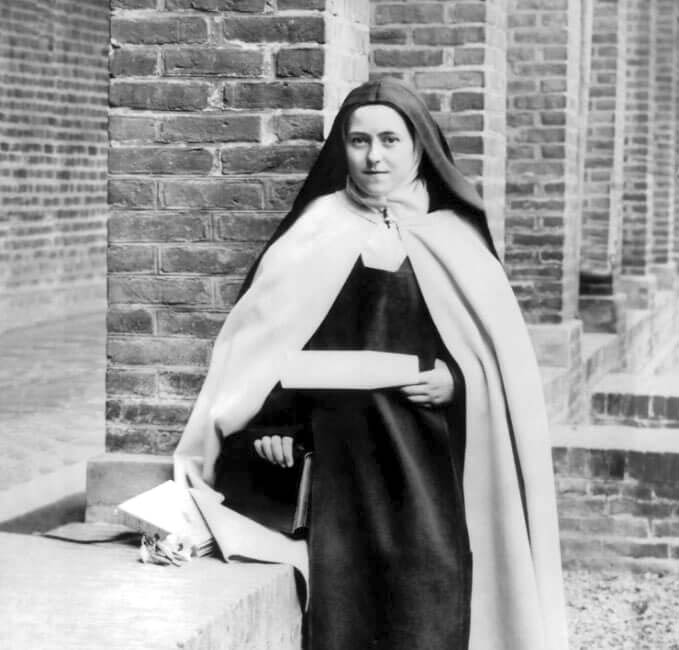
Thérèse in the Carmel courtyard, Lisieux.
Thérèse of the Child Jesus and of the Holy Face entered the Carmel of Lisieux at fifteen and died there at twenty-four. The world would later call her the Little Flower. She thought of herself as a new Joan of Arc, sent to rescue not only France but the whole world — by love, in secret.
The Little Way is not softness. It is a method of combat for people who will never command an army. Remain little. Return love for love. Offer the hidden things. Desire to be a great saint without needing anyone to notice. When she put those words in Joan's mouth on the convent stage, she was describing herself.
She wrote two plays for Joan, a canticle for her canonization, and a last poem from the dark. She acted Joan. She was photographed as Joan. In 1897 she told Abbé Bellière that she had not been mistaken about being destined for great things — only about the kind of crown.
I understood that my mission was not to have a mortal king crowned, but to make the King of Heaven loved, to submit to Him the kingdom of hearts.
“I would give a thousand lives to save a soul.” Parchment in her hand, words of Teresa of Ávila.
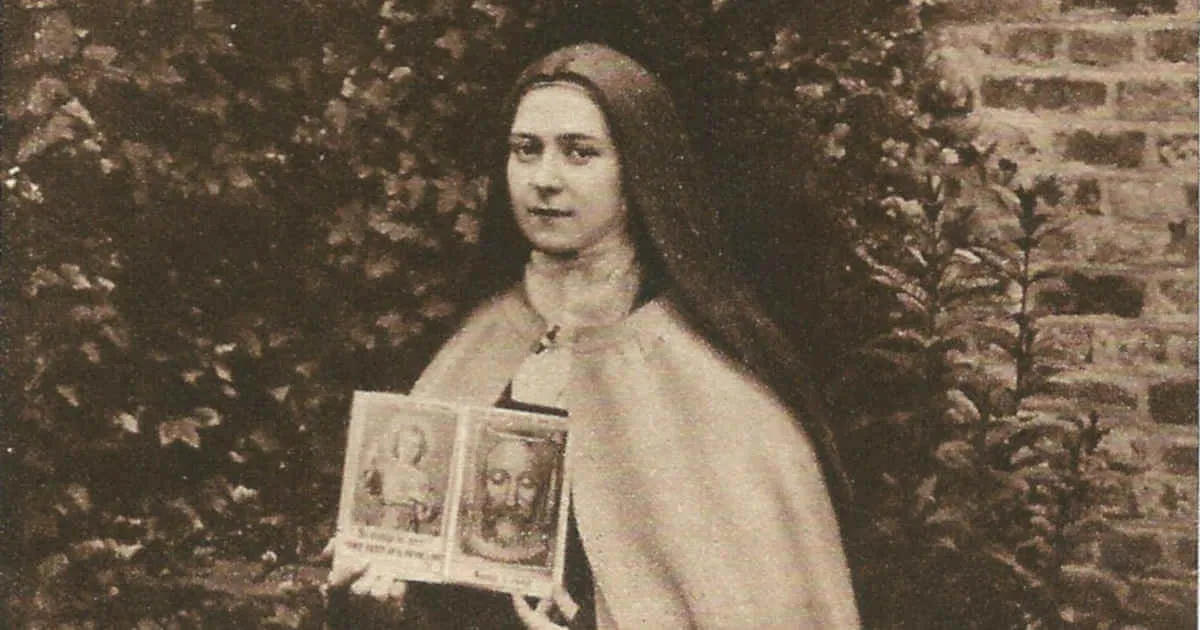
The Holy Face and the Child Jesus — the two titles of her religious name.
Warrior of the little way
After her death the Church moved quickly, as these things go. Canonized in 1925, named patroness of the missions in 1927, co-patroness of France with Joan in 1944, Doctor of the Church in 1997. Pius XI's phrase — "a new Joan of Arc" — was not a courtesy. It was a reading of her soul that she had already made.
The Combined Hearts holds that reading. Joan's sword and Thérèse's roses are not opposites. They are two forms of the same obedience.